The Baker Steet Bombshell
May 15, 2012
UPDATE July 2014: The Baker Street bombshell – as detailed below – has been removed. It’s whereabouts are now unknown.
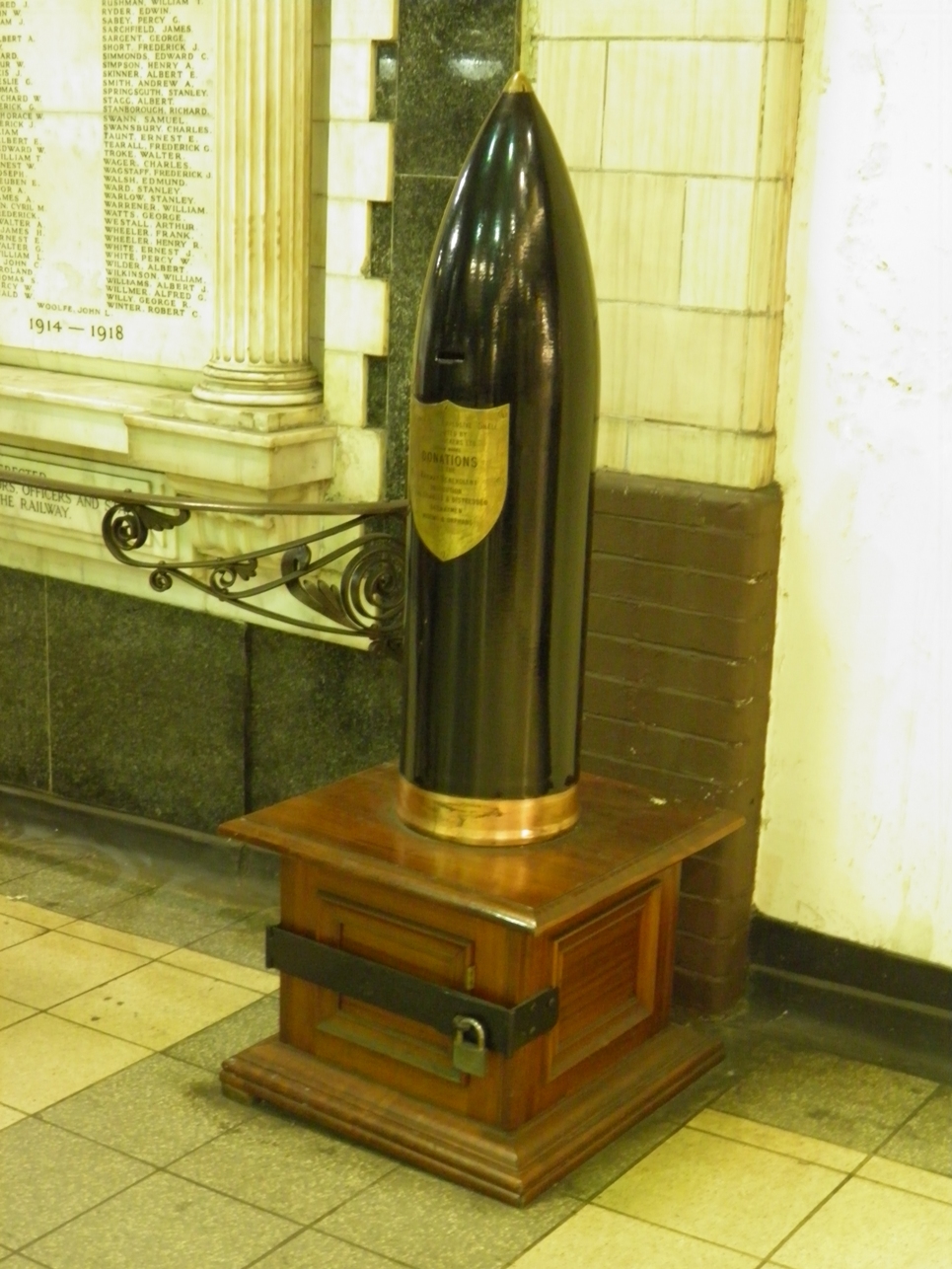
On the eastbound Hammersmith, Circle and District line platform at Baker Street is something you don’t usually want to be in close proximity to when you’re stuck underground.

A foot long World War 2-era shell.
Sitting beside the beautiful (and recently restored) marble memorial to the railwaymen who lost their lives in the First World War, the shell was donated by the engineering company Vickers for use as a Railway Benevolent Institution collection box.

It may seem a slightly bizarre gesture on Vickers’ part, as the engineering company’s name is more closely associated with the production of arms than with charity. The Vickers machine gun was the British Empire’s weapon of choice for half a century, and the company was one of the most significant British manufacturers of guns, tanks and aerial bombers during both of the World Wars.
But while most closely associated with armaments, Vickers was also a more general engineering firm, and during the 1920s, the company (by this time known as the Metropolitan Vickers Electrical Company) built twenty electric trains to run on the Metropolitan Line, which then terminated at Baker Steet.
Each train bore a plaque on the side bearing the name of a real or fictional person associated with an area along the Met Line (Lord Byron was chosen for Train No.4 as he was educated at Harrow; Train No.8 was called Sherlock Holmes, for his Baker St address.)
The Vickers trains were used until 1962, when the line was extended and the rolling stock updated. Train No. 5 – named John Hampden, after the politician who played a central role for the Parliamentary cause during the Civil War – is now on display in the London Transport Museum.
Clearly their connection with the Met Line led to Vickers making this altruistic gesture, but I can find almost no additional information about it. I don’t know where the shell came from, whether it’s a British or a German make, or whether it was ever live and ready to blow, but it’s a safe assumption to presume it was erected in the years immediately after WW2.

Incidentally, the Railway Benevolent Institution, set up in 1858, is still going strong under the name The Railway Benefit Fund. They contacted me in June 2014 to say they were unaware of the shell’s existence, and informed me that when they went to see it, the bombshell had been removed.
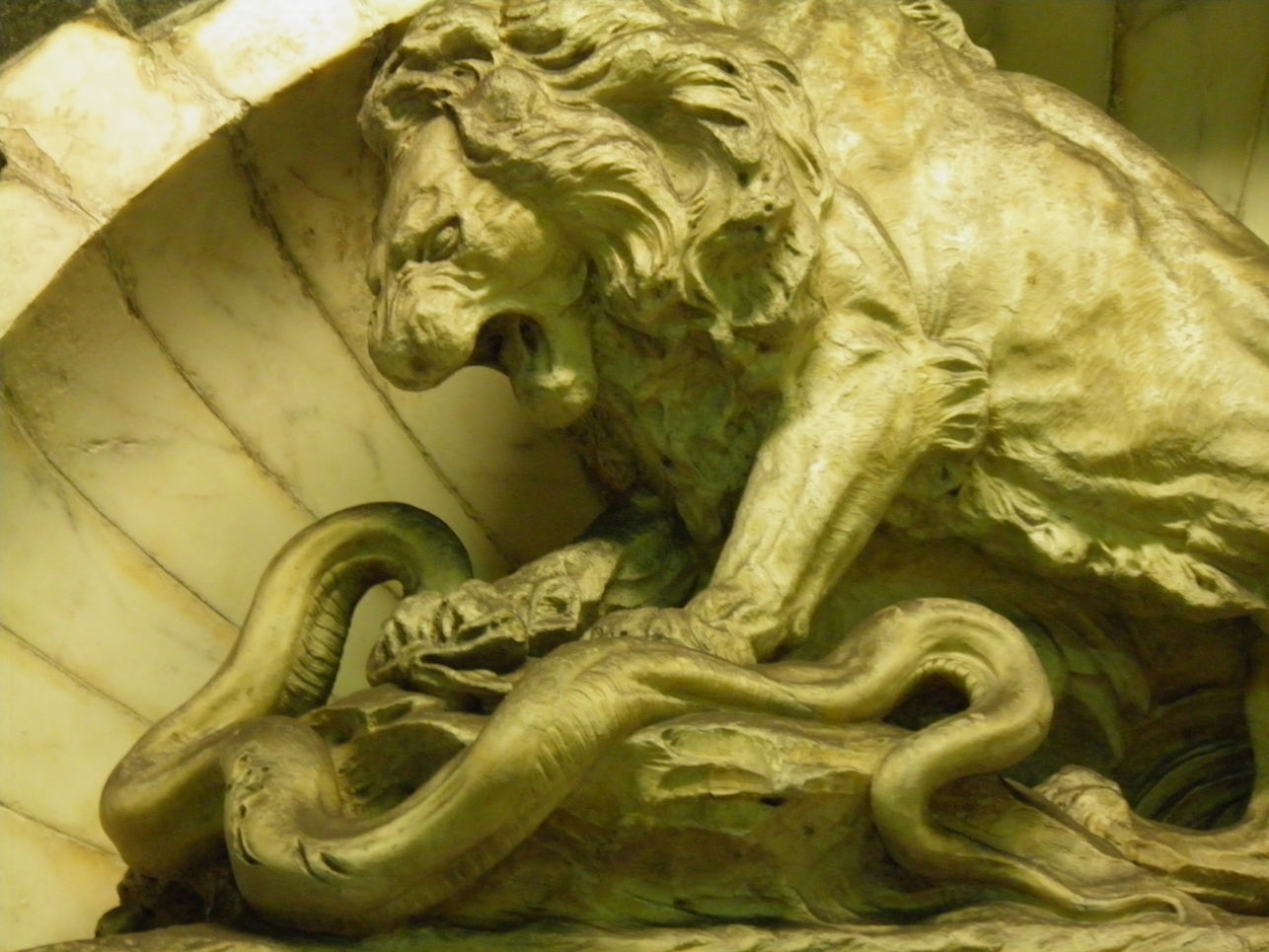
And it’s worth a closer look at the beautiful carving by Charles W. Clark on the top of the WW1 memorial of a lion crushing a serpent beneath its paw.
The Oxford Street beavers
May 6, 2011

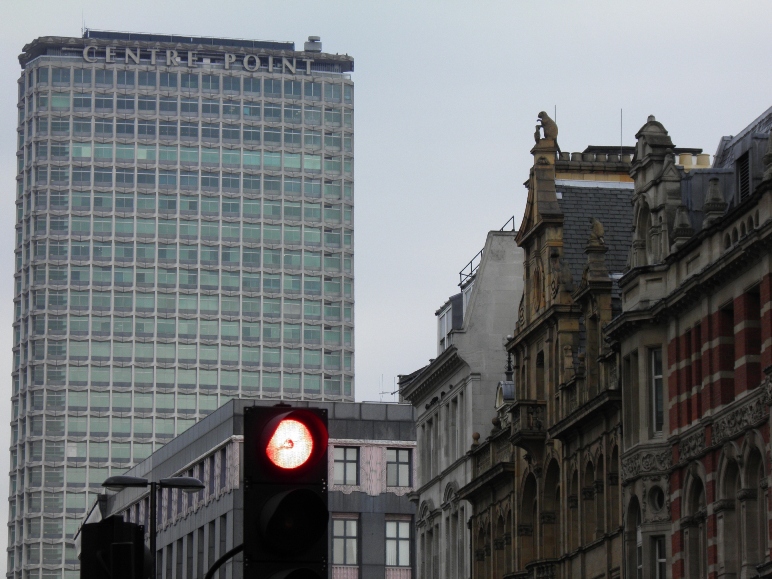
High above 105-109 Oxford Street sit a trio of London’s oddest statues.

Three stone rodents.
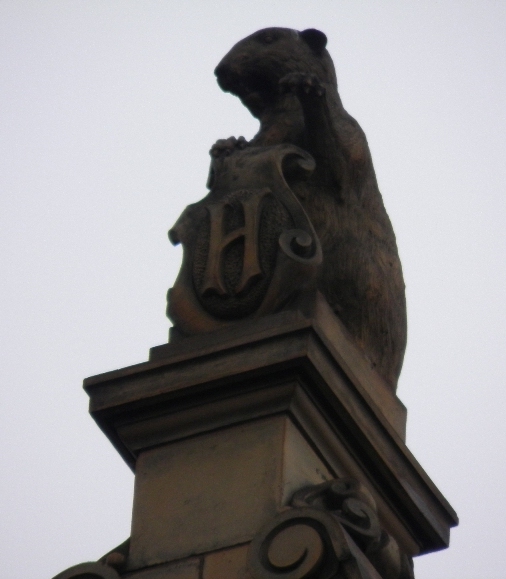
At first glance, they look a bit like rats, but the wide flat tail sported by the one on the right identifies them as beavers.

The one at the very top also comes with a scroll, bearing the initial ‘H’.
105-109 Oxford Street was formerly the premises of Henry Heath’s Hat Factory, and his name and profession are still spelled out in a brick facade on the back of the old factory, which can be seen from Berwick Street.

According to the firm’s own publicity in 1879, Heath’s hat factory dated back to the reign of George IV (1820-1830) and they guaranteed “1st , Their Quality; 2nd Excellence of Finish; 3rd Style.”

A relief of George can be seen above one of the windows, with the date 1822 most likely referring to the firm’s establishment. Next to it is a young Queen Victoria, 1887 being the date the premises were rebuilt.
Henry Heath’s primary product was top hats, which were made using felted fur from “Beaver Otter, Rabbits, Hares and Musk Rats.”
 A Henry Heath flyer from an 1884 exhibition
The firm was still advertising its products in 1931, but while they undoubtedly shut up shop due to the modern decline in hat-wearing, I’ve been unable to find out exactly when. If anyone knows, please drop me a line!
In the meantime, here’s a final shot of the beavers, who’ve been perched on the roof watching London change for the last 124 years.
 Darkest London