The dawn of Creation
January 20, 2012
In 1983, a Glaswegian-born, London-living British Railway employee named Alan McGee founded a music fanzine named Communication Blur, which span off into a fledging record label called Creation.
Having sporadically released records by the likes of Biff Bang Pow!, The X-Men and The Legend! (better known as NME journalist Everett True), McGee started a weekly music night called The Living Room in August 1983. The gigs fulfilled two purposes: the headliners sold tickets, meaning McGee could put the profits back into his record label, and it gave the largely unknown acts he had signed a chance to get some exposure.
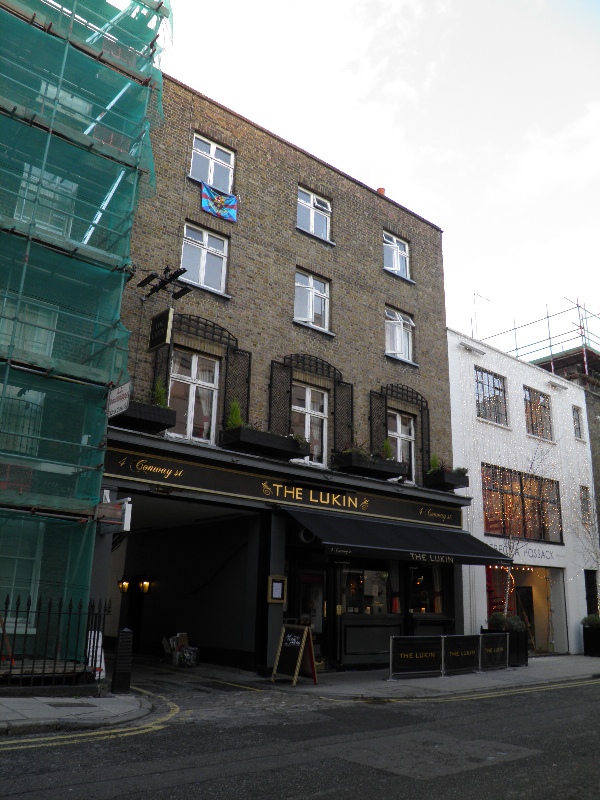
The club opened at The Adams Arms (now the Lukin) in Conway Street, in an upstairs room which had been a folk club called Dingles from the mid-1970s. In front of an audience of some 150 people, the Television Personalities headlined the first night, and the gig was reviewed in Groovy Black Shades issue 6 (1983).
The PA was minimal, the lights were either an anglepoise lamp or a slide show depending on the band. And it was so bloody hot!! But there was a very relaxed atmosphere, so relaxed that the first band Miles Landesman were still in the bar when they should have been on ‘stage.’
The first Creation LP (released in August 1984) was a compilation entitled Alive In The Living Room, consisting of recordings made on hand-held recorders from the audience at the Conway Street pub.

The bands recorded at the Adams Arms for the album include The Television Personalities, The Mekons, The Jasmine Minks, The June Brides, The Legend!, The Pastels and Alternative TV.
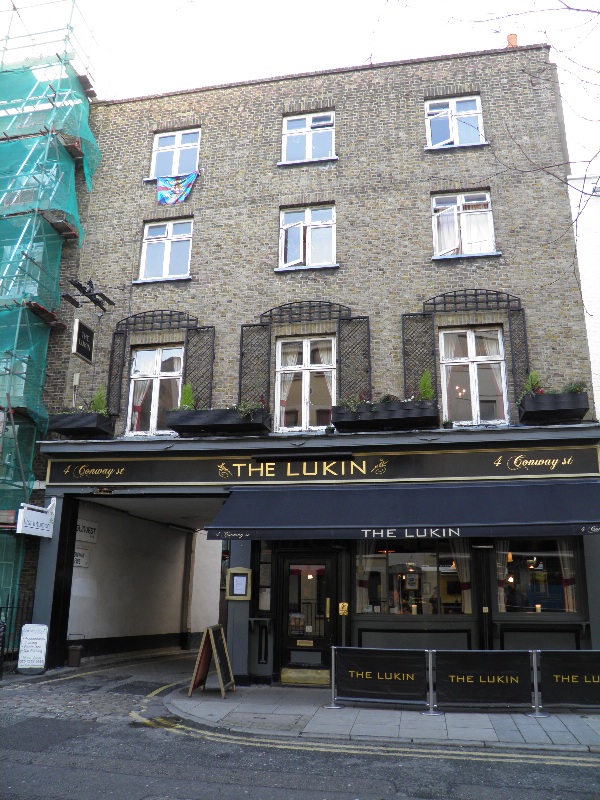
After a period as an O’Neills, the pub was renamed The Lukin in the 2009. I had wondered if this was a continuation of the pub’s musical history, and it was named after the American Mark Lukin, the bassist in the Melvins and Mudhoney (he’s practically the only Lukin that comes up on Google.) But after I said I thought it was a “crappy pun name” (as in ‘Look In’), I was emailed by Shaun, the owner. He rightly said if I’d wanted to know where the name came from, I should have just popped in and asked. So the next day, I went along.
From the outside, I’d thought it was a chain pub; I couldn’t have been more wrong. It’s a charming, large, jam-packed local, and on the Friday I went in, it was heaving with people ordering roasts. Shaun couldn’t have been more welcoming, and he urged me to pop upstairs to see the room where the club had originally been.

To the left is a bar, to the right, a huge fireplace. It’s exactly as it was when the club was running nearly thirty years ago.
Sadly, there’s no chance of it being used for any more live music, Shaun told me – the area is now residential enough to mean complaints about noise. He also let me know that The Lukin is named in honour of his grandfather (Lukin was his surname.)
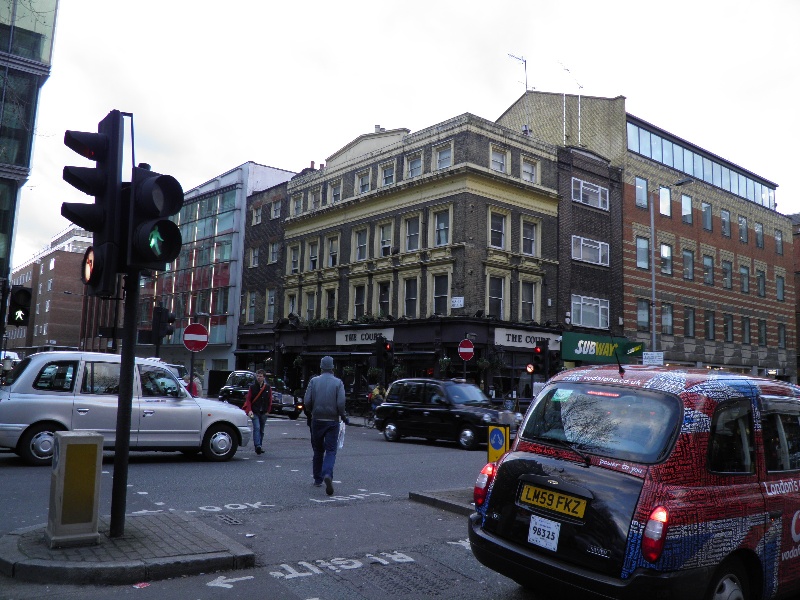
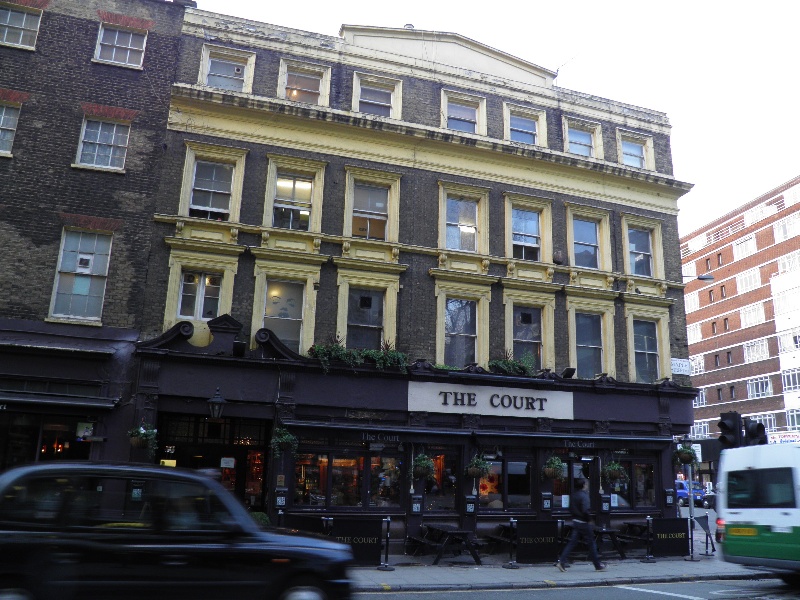
The Living Room moved from the Adams Arms in 1984 to the upstairs room of The Roebuck (now The Court) at 108 Tottenham Court Road. The new venue already had a small musical footnote associated with it – in July 1965, 18-year-old Davey Jones performed a successful audition for manager Ralph Horton at the pub with his band The Lower Third (two months later, Jones adopted the stage name ‘David Bowie.’)
It was at the Roebuck “in front of 10, possibly 15 people” on the 8th June 1984 that East Kilbride’s The Jesus and Mary Chain performed their debut London gig.
Reminiscing about the night in MOJO, Jim Reid recalled “it was an absolute racket. We’re still having a blazing row while we’re supposed to be playing this song…” Bass player Douglas Hart remembered that “there was a lot of pent-up energy released. Years of frustration. It was total chaos. People just stood and stared.”With the guitars untuned, a broken fuzz pedal creating a horrible noise, the PA emitting ear-splitting shrieks of feedback as it struggled with the volume, and William Reid playing with his back to the audience, the set lasted just ten minutes.
Even though Creation’s co-founder Dick Green later admitted “I’m sure nobody meant it to sound like it sounded,” an awestruck Alan McGee signed the Jesus and Mary Chain to his fledging label immediately.

The Jesus and Mary Chain with (R) Alan McGee in Plymouth, 1985 (photo by Valerie Hicks)
Their first single Upside Down stayed on the UK indie chart for 76 weeks, becoming one of the biggest selling indie singles of the 1980s, and would kickstart McGee’s rapid rise into the big leagues. The Living Room shut up shop sometime late in 1984 as McGee went on to sign a who’s who of British indie acts throughout the next decade, including My Bloody Valentine, Ride, Oasis, Primal Scream, Teenage Fanclub and the Super Furry Animals.
The name ‘Creation’ became famous worldwide, but it was in these two Fitzrovia pubs where the label’s rise truly began.
But it’s hard not to feel there’s something daft about changing pub names, which wipe out even the most recent years of history in a single stroke.
The Field of Forty Footsteps
January 17, 2012
The area between Bloomsbury and Euston is a strange part of London. The wide empty roads run between towering buildings set around a series of large, flat, featureless squares. Most are canopied by vast trees. With no shops or businesses along the road, and large silent academic buildings fencing the squares in on both sides, there aren’t often many people around. The squares are consequently unusually (almost eerily) quiet for a central London location.

The people in the squares are so unaccustomed to having company, they often look up as you wander in, stare suspiciously for a while and hesitatingly dip back into their books. Whenever I’ve been into one, there are only ever a couple of solitary UCL students sitting on a distant bench, or a runner briefly diverting through the grass before popping back on the road. Like me, many of them must half-wonder if the squares are private and just be waiting for someone to come over and angrily ask them how they got in and what the hell they think they’re doing. It’s the type of place you half expect to spot George Smiley whiling away the hours waiting for a contact to arrive.

Tavistock Square Gardens are much the same as the neighbouring seven squares, but the large statue of Gandhi in the middle means there are usually one or two Indian students hanging around at the gates, some of whom leave handfuls of fresh flowers at the base. A tree, planted by the then Indian Prime Minister Nehru in 1953, grows in the south-east of the square.
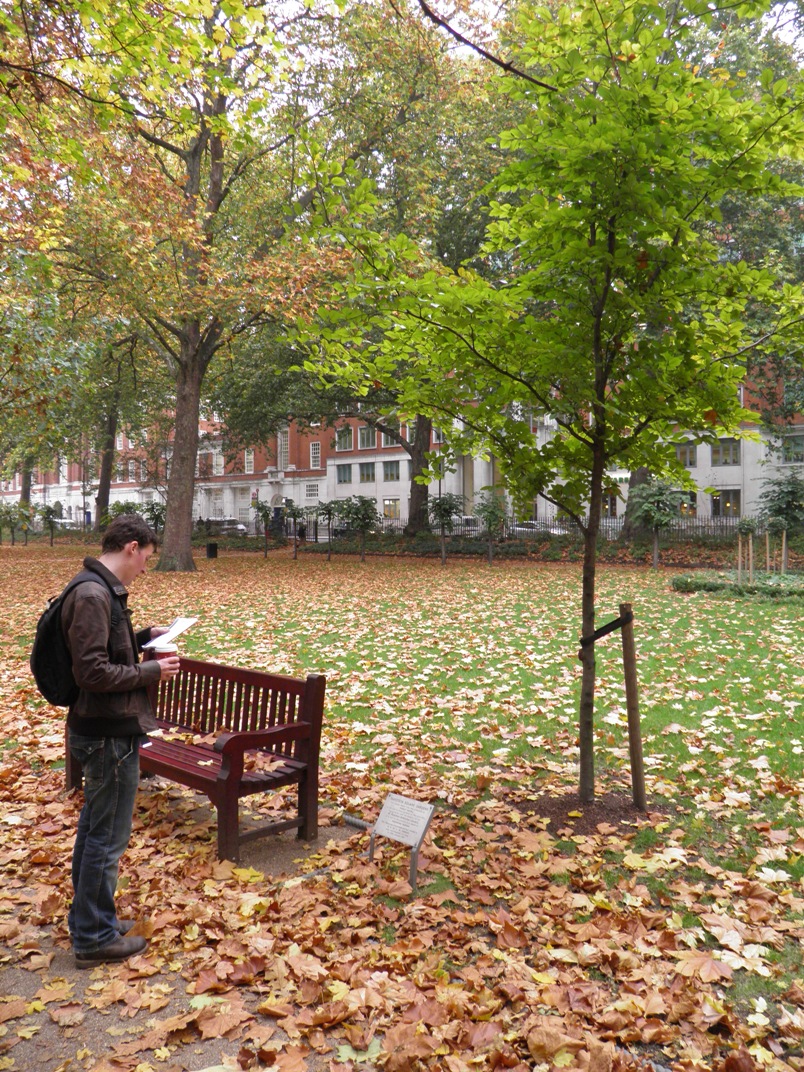
But close by the tree there’s something which doesn’t grow.
Long before the area was laid out as squares and terraces at the end of the 1700s, it was known as Southampton Fields. Unlit, undeveloped and on the far edge of seventeenth-century London’s sprawl, it was a popular haunt for lovers who picked plantain, a low growing herb, for it’s supposed aphrodisiac qualities.
The same privacy which attracted lovers also attracted those who had scores to settle away from the bright lights (and the justice) of the town. As the nineteenth century antiquarian John Timbs put it in The Romance of London, “the ground lay waste, and being on the edge of the great town, presented a ready arena for its idle and lawless dangerous classes…They were the resort of depraved persons, chiefly for fighting pitched battles.”
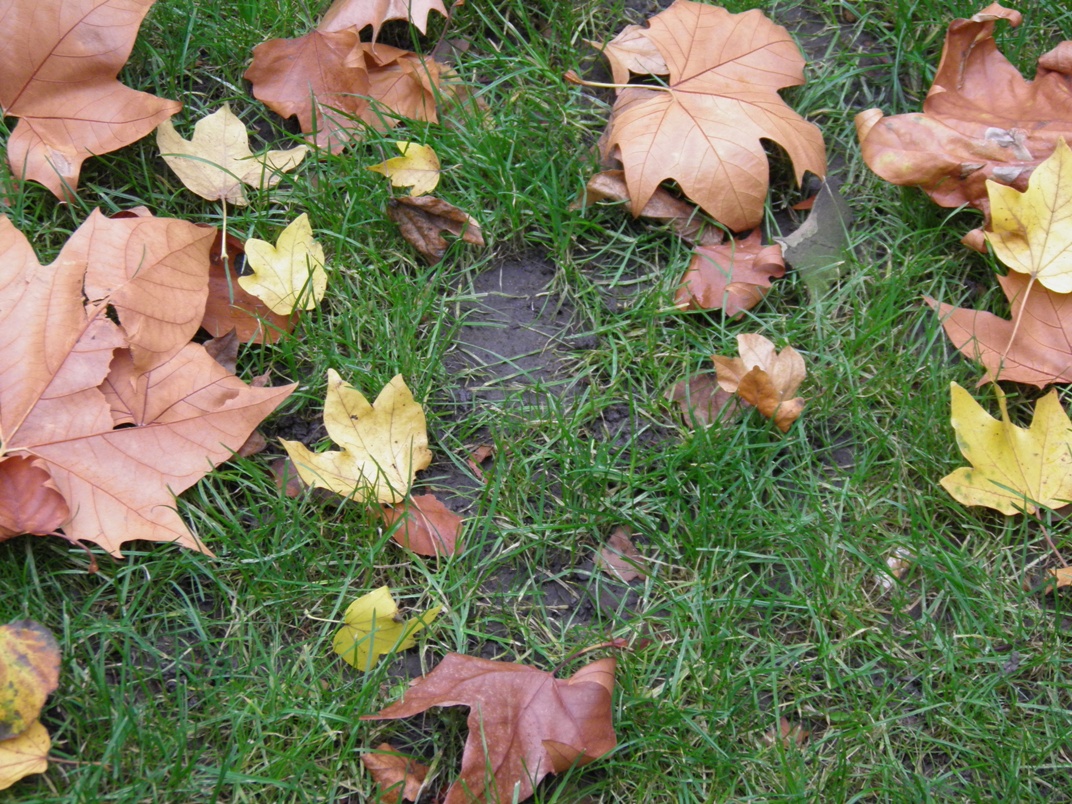
According to legend, two brothers, both soldiers in the Duke of Monmouthshire’s short-lived peasant army, met on the site of the present day Tavistock Square in 1695 to fight a duel. They had both fallen in love with the same woman “who would not declare a preference”, and as she coolly watched, the two brothers “fought so ferociously as to destroy each other; after which, their footsteps, imprinted on the ground in the vengeful struggle, were said to remain, with the indentations produced by their advancing and receding; nor would any grass or vegetation ever grow over these forty footsteps.”
In this unnatural act – brother killing brother – the very ground on which their blood had been spilled is said to have revolted. The scene soon became known as the Field of the Forty Footsteps, a phrase coined by one “Miss Porter and her sister”, who heard the story and used it as the basis for a romantic novel.

The poet Southey visited “The Brothers’ Steps” after a friend recommended he “take a view of those wonderful marks of the Lord’s hatred to duelling.”
We sought for near half an hour in vain…We were almost out of hope, when an honest man, who was at work, directed us to the next ground, adjoining to a pond. There we found what we sought…The steps are of the size of a large human foot, about three inches deep, and lie nearly from north-east to south-west. We counted only seventy-six; but we were not exact in counting. The place where one or both the brothers are supposed to have fallen is still bare of grass. The labourer also showed us the bank where (the tradition is) the wretched woman sat to see the combat.
Of course, with popularity came the reason why the footsteps were so apparent. As stated by A Book For A Rainy Day, the author mentioned that “the fact is, that these steps were so often trodden that it was impossible for the grass to grow.”

In 1800, the author of Commonplace Books, Joseph Moser, claimed the footsteps were built over as the terraces were erected.
June 16, 1800. Went into the fields…and there saw, for the last time, the forty footsteps; the building materials are there, ready to cover them from the sight of man. I counted more than forty, but they might be the footprints of the workmen.
Huge numbers of London books over the centuries have retold the tale – but none of the authors I’ve read actually bothered to see if these footsteps were still in Tavistock Square. So I went with my camera to see if they were.
And you know what?
They are.

I know – it’s silly.
I was looking for patterns. Look at the mud in any park you chose to go into, and you’d find similar shapes. The mind tricks the eye into seeing what it wants to see.
But whatever the real explanation is – mental suggestion, an ancient fraud, or some botanical fungus that kills those particular portions of grass – it sure looks to me like a row of man-sized footprints walking in a straight line exactly where the old books said they’d be.
A Tesco Far, Far Away
January 3, 2012

The vast Tesco in Borehamwood is probably the most famous supermarket in the London area.
Walking into it – and it’s more like walking into a small town than a supermarket – there’s little clue as to its claim to fame. But looking around, there are one or two hints.
On top of the covered walkway leading up from the huge, featureless car park is an unusual weather vane.

And if you look to your left when you reach the doors, there’s a much larger clue.
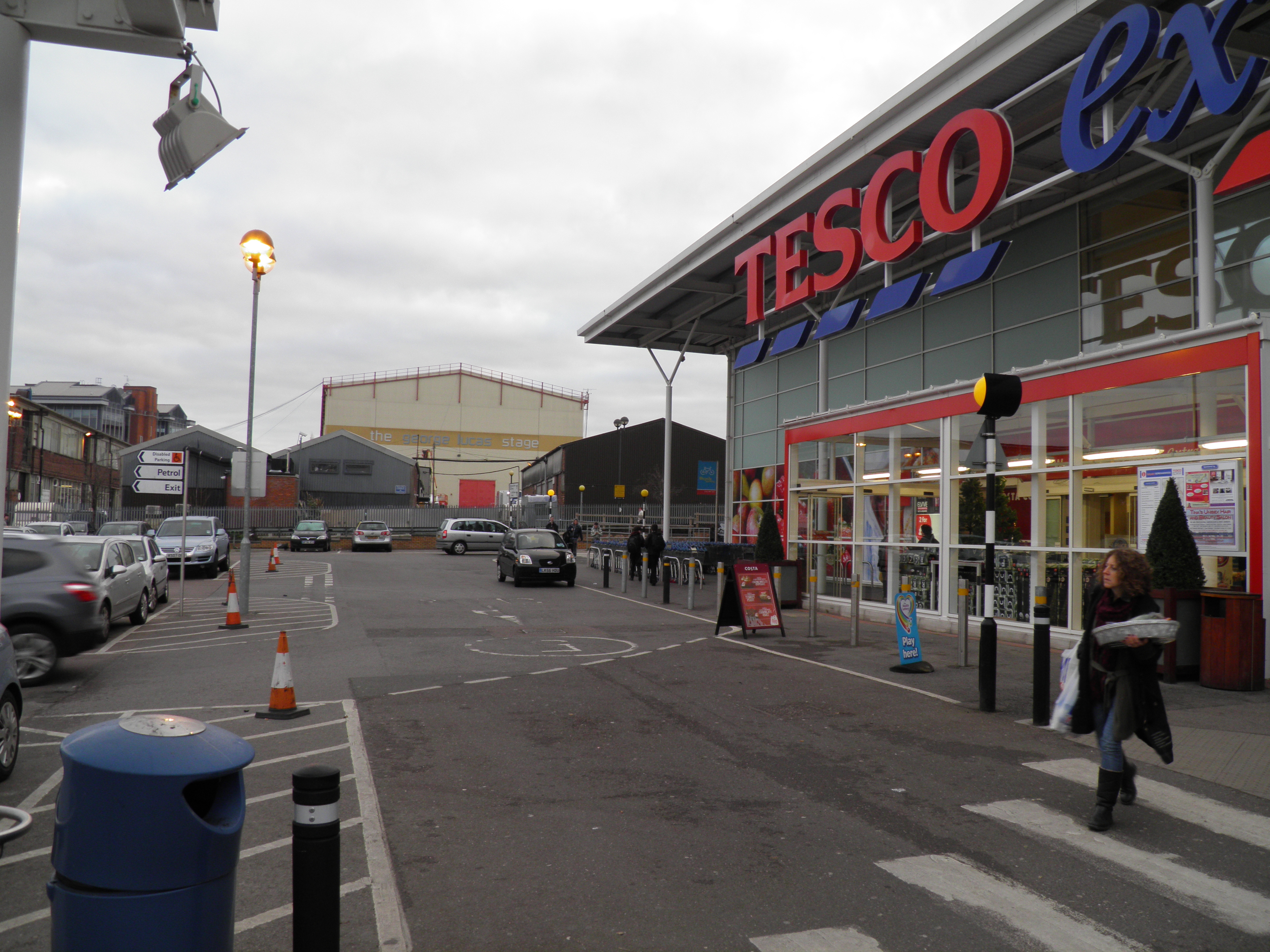
Before the mammoth Tesco was built, the site formed the backlot of Elstree Studios – the most important film studio in Britain during the 1960s and 1970s and today most famous as the location where the original Star Wars trilogy was filmed.
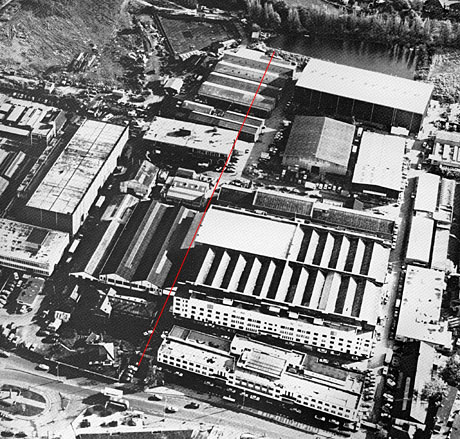
The image below shows the studios at the time Star Wars was filmed – to the right of the red line is where the Tesco stands today, while on the left is what remains of the studios, all largely untouched.
Opened in 1925 as the First National Studios by American JD Williams (who bought the site when it was informed it was “free of fog”), the 50 acres making up Elstree Studios are actually not located in Elstree, but Borehamwood. At the time, Borehamwood was little more than a few houses and a pub, so the railway station in the centre was named ‘Elstree’ after the better known nearby village (the station’s name eventually changed to Elstree and Borehamwood to reflect the town’s growth.)

In 1929, the first British talkie was produced at the studios – Blackmail, directed by a 30-year-old Alfred Hitchcock. A parallel silent version was also made, which proved more popular at the time, due to a lack of cinemas with the technology to broadcast the soundtrack.
As Elstree Studios – and the five rival studio complexes which sprang up in its wake – brought work to the area, Borehamwood grew into a larger town. It was dubbed the ‘British Hollywood’ during the 1950s and 1960s, when films including The Dam Busters, Look Back in Anger, Cliff Richard’s The Young Ones and Summer Holiday, Stanley Kubrick’s Lolita and Ice Cold In Alex were filmed in the six studios, side by side with a host of hugely successful TV series including The Avengers, Jason King, The Saint, The Champions and Randall and Hopkirk (Deceased).

In the early 1970s, the studio work started to slowly dry up – classic films like The Railway Children and A Clockwork Orange gave way to On The Buses and the Confessions of a Window Cleaner series, and the TV dramas deserted the studios for location shoots, taking a page out of the book of ITV’s hugely popular The Sweeney.

The similarly struggling Hammer production company moved from Bray to Elstree in 1967, and made a series of movies at the studios until they slid into bankruptcy in 1979. Aside from a handful of late classics (such as Quatermass and the Pit and One Million Years BC, remembered more for Raquel Welch’s fur bikini than anything else), the Elstree-vintage Hammer films began to ramp up the gore and nudity as the censors relaxed the code, and they had to compete with more gruesome horror fayre from America and Italy. 1976’s Dennis Wheatley adaptation To The Devil A Daughter was the final Hammer film made at the studios and it largely disappeared without trace at the box office.

The struggling studios were thrown a lifeline in 1975, when George Lucas decided to film Star Wars at Elstree (the first shot of the film was recorded in Studio 8, which is still standing today – when I was there, the ITV show Dancing On Ice was being loaded in.)

It was simply a stroke of good luck out of bad. Fox had little faith in the supposedly ‘dead’ genre of sci-fi, so wanted to hire somewhere cheap for what they thought would undoubtedly be a money-loser. Elstree’s studios were not just big enough to accommodate the massive scale of Lucas’s pre-CGI vision, but they were also empty and available at rock-bottom prices. And it wasn’t just Fox that had no faith in Lucas’s movie being a success – Elstree Studios were offered a flat-fee or a percentage of the profits of the film, and immediately plumped for the flat-fee.
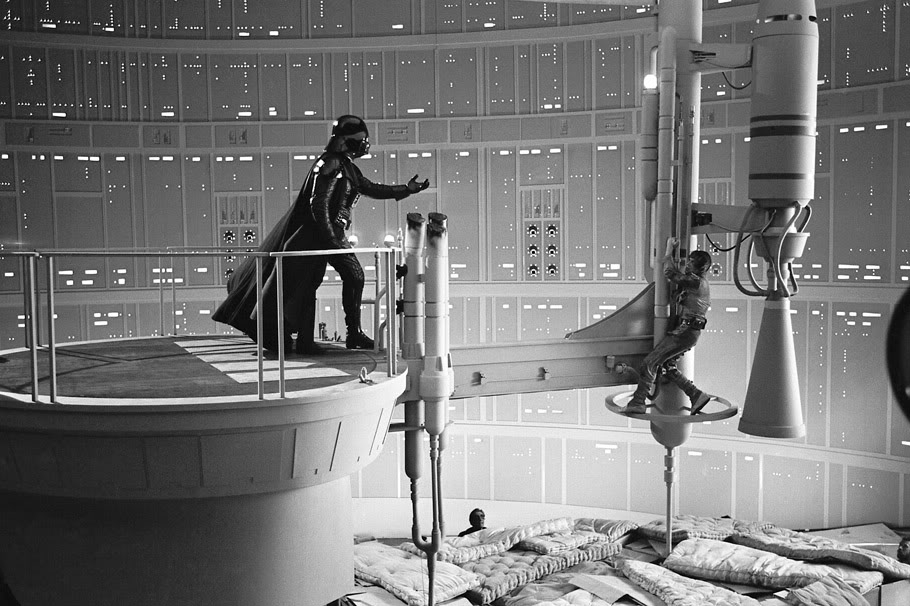
Lucas returned again in 1979 to make The Empire Strikes Back, in 1982 to make Return of the Jedi, and over the years Willow, Labyrinth and the Indiana Jones series (having been taught a lesson about underestimating Lucas’s money-making ability by taking a flat-fee instead of a profit share with Star Wars, the studio amazingly rejected exactly the same offer when he made Raiders of the Lost Ark.) It was the era of the big studio-bound spectacular, and it would mark the high watermark of Elstree’s fortunes.

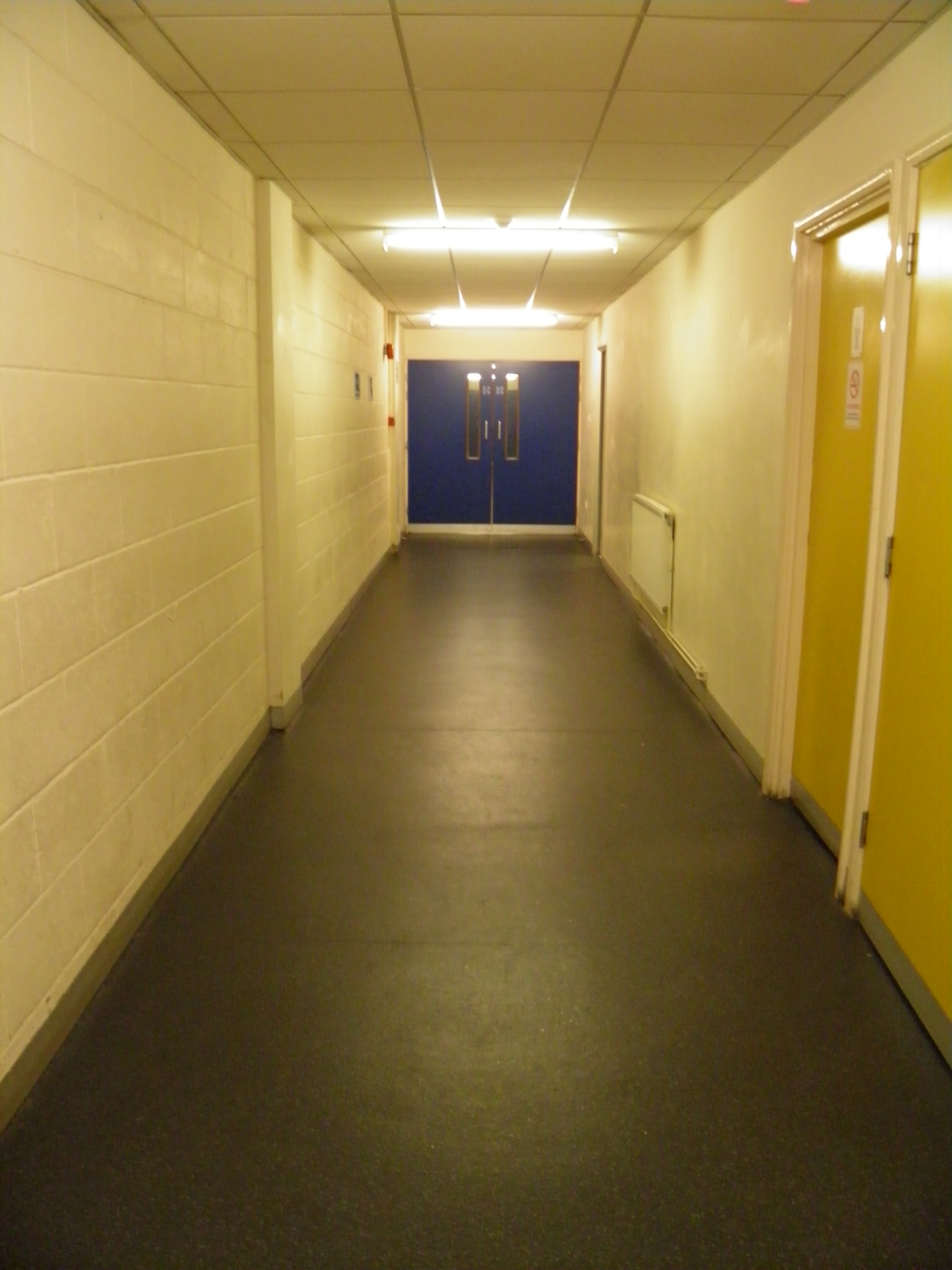
Lucas’s contribution to the studio’s fortunes are commemorated in the massive George Lucas Stage which was built in 1999, overlooking the Tesco where his movies were made. Popular legend has it that the scenes set on the ice planet of Hoth were filmed where Tesco’s frozen food aisle now sits. Inside, the corridors running between the huge cavernous studios are almost entirely featureless. It’s not exactly a magical place.
In 1978, Kubrick filmed The Shining at Elstree, building the entire Overlook Hotel interior on Stages 3 and 4, with the exterior constructed on the backlot, with mountains of salt standing in for snow. It all now forms part of Tesco’s car park.


In a bizarre piece of trivia, one of the runners on the film was a local boy from Elstree named Simon Cowell, who would go on to international fame twenty years later. Although none of his TV shows were filmed at Elstree, there is now a prominent plaque to Cowell outside – the first film he worked on was The Return of the Saint, so it’s at least tangentially appropriate that his tribute is next to one for Roger Moore.

Despite these bright spots, the productions were sporadic, and the studios went through a number of different owners through the years. The other studios amalgamated, moved or wound-up; today, only Elstree Studios and BBC Elstree (the long-term home of Eastenders) remain.
In 1988, following numerous takeovers and an ongoing decline in revenues, the studios were bought by the property developer Brent Walker, who had dabbled in movies under the Goldcrest name. Under the guise of modernising and compacting the virtually derelict studios, they demolished six of the nine studios and sold the entire (now empty) backlot to Tesco. Despite a pledge to operate the studios for 25 years, Brent Walker ran into financial difficulty and decided to close the doors in 1995.
For three years, they tried to sell off the derelict site for use as a shopping centre, with the main opposition to their plan coming from a local campaign named Save Our Studios, run by the council’s Entertainment Officer Paul Welsh. As a lifelong film buff and Borehamwood resident, Welsh had seen at first hand how the industry failed to preserve or value its own heritage. He told the Elstree Studios website:
I’ve seen things thrown into skips that you could cry about. I’ve seen scripts discarded, props from Star Wars that would cost a fortune now to buy abandoned, documents from Hitchcock’s Blackmail dumped into a skip. In the late sixties they had a library of screen tests that they’d done on actors of the 1930s. Richard Harris, Audrey Hepburn, Laurence Olivier, a whole cast of people who’d gone through the studio, and an executive of the time just stopped by and said, ‘what’s the purpose of keeping the junk?’ and they just scrapped it all.
Partly due to the pressure from Walsh, Brent Walker sold the site in 1996 to Hertsmere Borough Council for £1.9million. Since then, the studios have been renovated, and the TV side rejuvenated. Within a decade, the studios were the home of Who Wants to Be A Millionaire and the Big Brother house, which moved from East London into a vast sunken water tank at the back of the studios, which was originally constructed for 1955’s Moby Dick.

In recent years, the movies have also returned, with recent productions at Elstree including The King’s Speech, Saving Private Ryan, Batman Begins, The Other Boleyn Girl, Notes on A Scandal, Tomorrow Never Dies and Kick Ass.
The town’s fortunes have always been linked to the rise and fall of the nearby studios, and the long, steady decline in the British film industry over the last forty years have been reflected in the surrounding area. Nowadays, Borehamwood is a long, bleak strip of charity shops, orange-hued greasy spoons, tatty pawn shops and grim, boarded-up frontages.
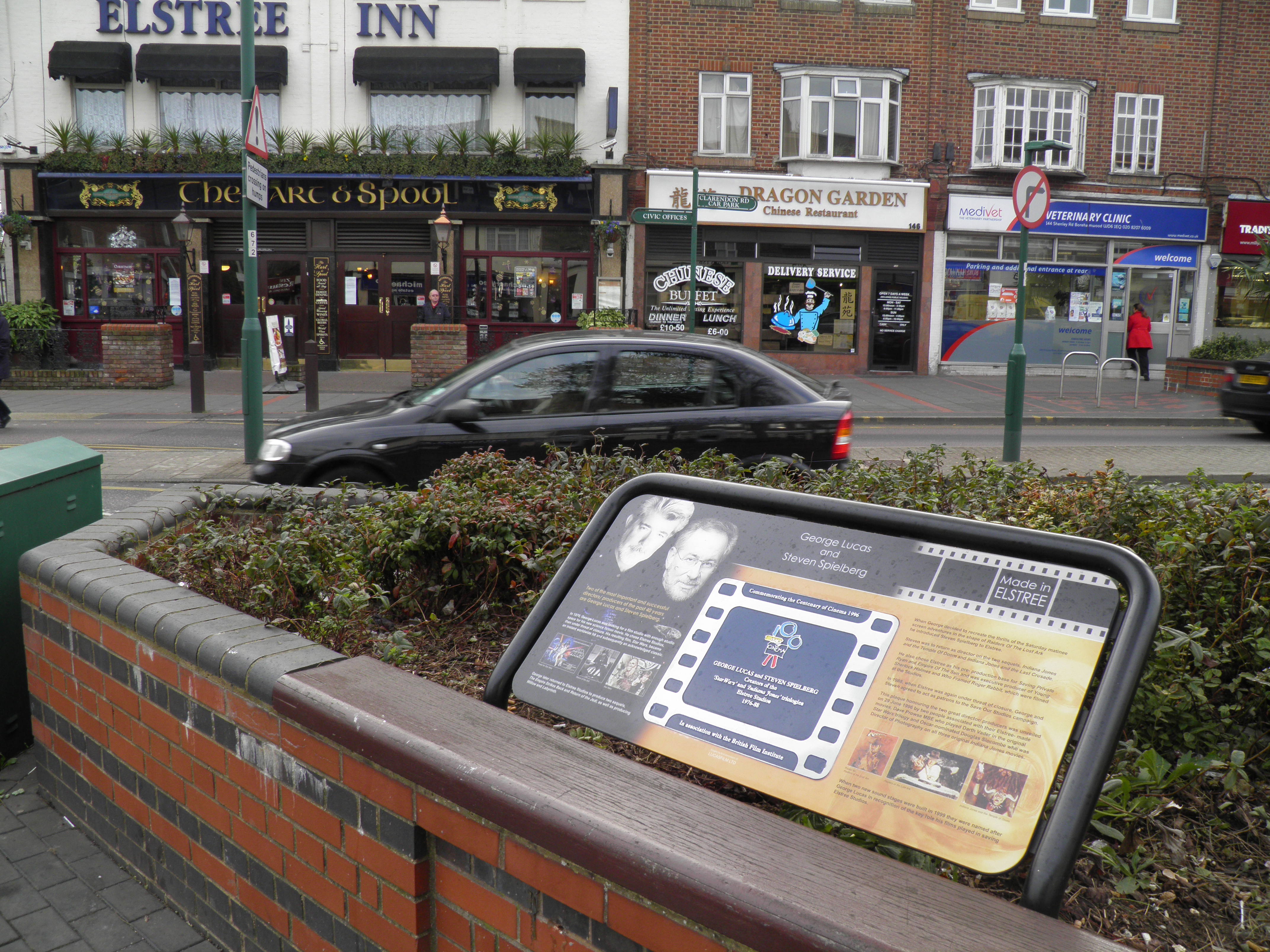
In 2006, the town attempted to celebrate its unique connection to British cinema history with a series of semi-successful council-led displays. Along the roads are a series of metal information boards dedicated to the stars who worked at the studios.

Chock-a-block with history, they’re placed in large, unkept brick flower beds outside the pubs and 24-hour newsagents. When I was there, no one was paying them any attention at all, and most people looked at me with curious puzzlement when I took my camera out to photograph them.
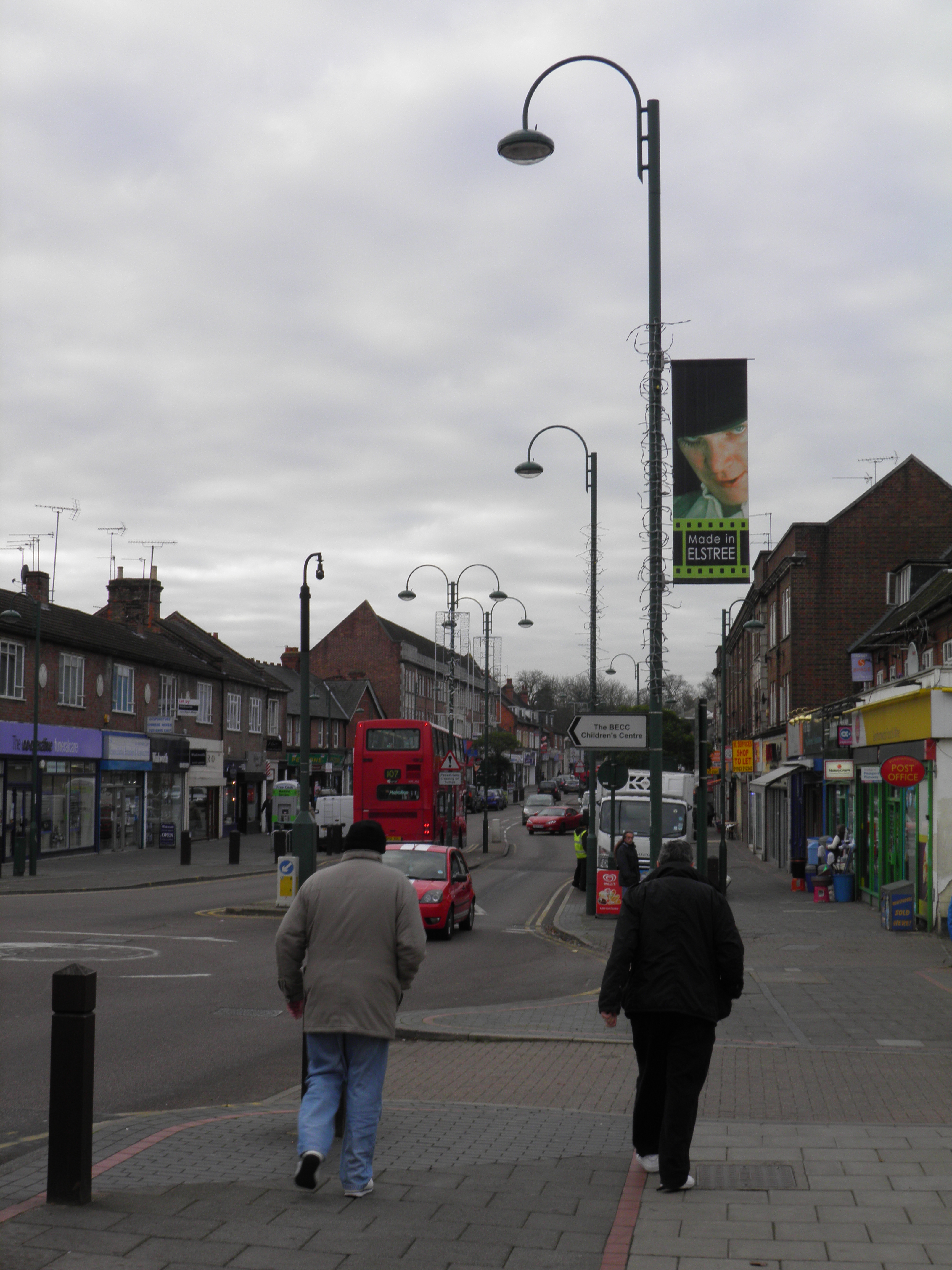
On the High Street, large banners proclaiming “Made in Elstree” (although technically it should be “Made at Elstree” as the films were all made in Borehamwood) show stills from of the iconic movies made at the studios – hence, A Clockwork Orange’s Alex stares down menacingly at the old people shuffling past the pawnbrokers, Chewbacca growls at the traffic streaming over one of the countless traffic-slowing ramps, and Darth Vader flutters proudly over a branch of Nando’s.
At the railway station is a miniature walk of fame with one star commemorating Harrison Ford – the man who famously referred to the area as “Boring-wood.” A completely lackluster paving slab, it’s a fitting tribute.

In the Tesco itself, the only reminder of its former use is an aisle of Star Wars toys – situated not far from where the film which inspired them was created thirty years before.
 Darkest London